


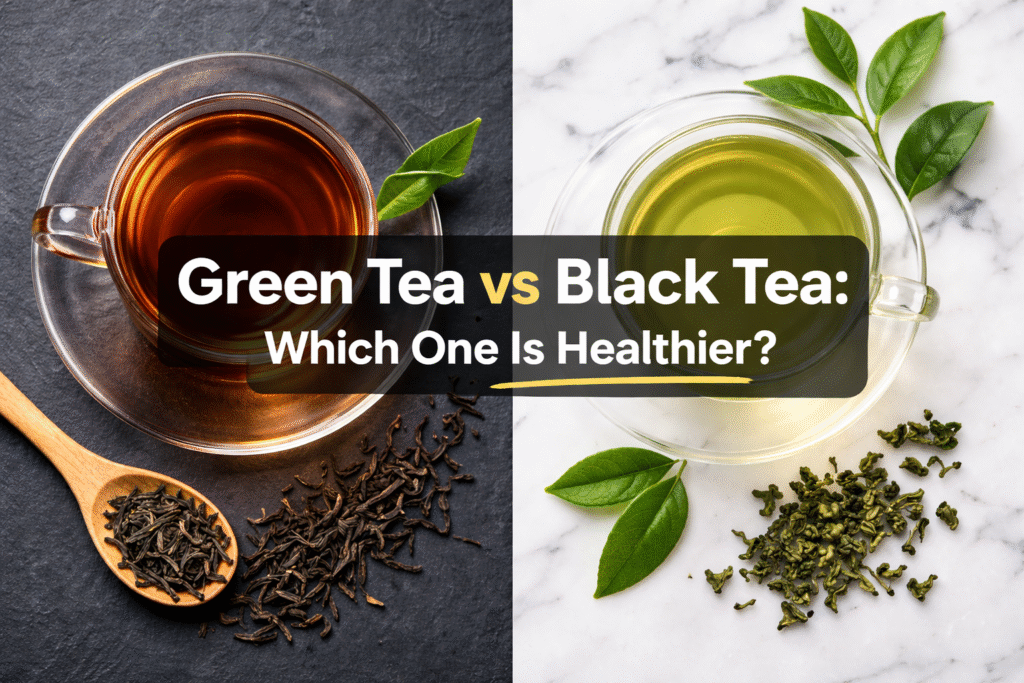
Tea is the second-most-consumed beverage in the world, and for good reason. Whether you reach for a bold, amber-coloured cup in the morning or sip a delicate green brew in the afternoon, both varieties come from the same plant — Camellia sinensis. Yet the differences between them run surprisingly deep, touching on flavour, nutrition, health benefits, and even the best time to drink them.
This guide breaks down everything you need to know — from caffeine levels and antioxidant content to their effects on skin, blood sugar, and body weight — so you can make a truly informed choice for your lifestyle and wellness goals.
What Makes Black Tea and Green Tea Different?
The single biggest difference lies in how the leaves are processed after harvesting. Green tea leaves are quickly steamed or pan-fired to halt oxidation, preserving their natural green colour and delicate plant compounds. Black tea leaves, on the other hand, are fully oxidised—a process that turns them dark and develops a completely different set of antioxidants, flavours, and aromas.
This oxidation difference is the root cause of nearly every disparity in taste, colour, caffeine content, and health profile between the two.
Quick Overview: The Oxidation Factor
- Green tea: 0–5% oxidized, retains catechins like EGCG (epigallocatechin gallate)
- Black tea: ~100% oxidized, develops theaflavins and thearubigins
- Same plant, completely different chemistry
Side-by-Side Comparison at a Glance
Use this table as a quick reference before diving into the details:
| Feature | Green Tea | Black Tea |
| Oxidation Level | Unoxidized (0–5%) | Fully Oxidized (100%) |
| Caffeine (per cup) | 20–45 mg | 40–70 mg |
| Antioxidants | Very High (EGCG) | High (Theaflavins) |
| Flavor Profile | Light, grassy, vegetal | Bold, malty, robust |
| Best for Weight Loss | Strong evidence | Moderate evidence |
| Blood Sugar Control | Good | Good |
| Heart Health | Strong evidence | Good evidence |
| Skin Benefits | Higher (EGCG) | Moderate |
| Blood Pressure | Beneficial | Beneficial |
Caffeine Content: Which Tea Gives You More Energy?
Caffeine is often the first thing people consider when choosing between the two. If you need a morning boost, black tea typically delivers more caffeine per cup — usually between 40 and 70 mg, compared to green tea’s 20 to 45 mg. However, the numbers can vary based on the variety, brewing time, and water temperature.
What makes green tea’s caffeine effect feel smoother is the presence of L-theanine, an amino acid that promotes a calm, alert state. When combined with caffeine, L-theanine reduces jitteriness and helps sustain focus — which is why many people describe green tea’s energy lift as more “zen” compared to the sharper kick of black tea.
Pro Tip: If you’re sensitive to caffeine, brew both teas at lower temperatures and for shorter durations to reduce caffeine extraction without losing taste.
Black Tea vs Green Tea for Weight Loss
Both teas have earned a reputation as weight management allies, but they work through slightly different mechanisms.
How Green Tea Supports Weight Loss
Green tea’s primary weight-loss compound is EGCG (epigallocatechin gallate), a powerful catechin that has been shown in multiple studies to boost metabolic rate and increase fat oxidation. Drinking green tea before exercise may enhance the body’s ability to burn fat as fuel, particularly during moderate-intensity workouts.
How Black Tea Supports Weight Loss
Black tea works through a gut-health pathway. Its polyphenols — specifically theaflavins — help modify the gut microbiome in ways that may reduce calorie absorption and improve metabolism. Research published in the European Journal of Nutrition suggests that black tea polyphenols promote the growth of beneficial gut bacteria associated with leanness.
Bottom Line: Green tea has slightly stronger evidence for direct fat burning, but both teas contribute meaningfully to a healthy weight when paired with a balanced diet and regular movement.
Health Benefits: What Science Actually Says
Green Tea Benefits
- Rich in EGCG — one of the most studied antioxidants in the world
- Supports brain health and may reduce the risk of neurodegenerative conditions
- Linked to lower LDL cholesterol and reduced cardiovascular risk
- May help regulate blood sugar levels by improving insulin sensitivity
- Anti-inflammatory properties that benefit overall cellular health
Black Tea Benefits
- Contains theaflavins shown to reduce LDL (‘bad’) cholesterol
- Supports gut health through prebiotic-like effects on the microbiome
- May protect against certain types of cancer (preliminary research)
- Linked to lower stroke risk when consumed regularly
- Provides a sustained energy boost with less risk of a caffeine crash than coffee
Green Tea or Black Tea: Which Is Better for Skin?
If skin health is your priority, green tea holds a notable advantage. The high concentration of EGCG gives it powerful anti-inflammatory and antioxidant properties that help combat free radical damage – one of the leading causes of premature ageing.
Topical green tea extracts are commonly used in skincare for reducing redness, fighting acne-causing bacteria, and protecting against UV-related damage. Drinking green tea regularly contributes to these benefits from the inside out, helping maintain collagen integrity and skin elasticity.
Black tea isn’t without skin benefits of its own. Its tannins can help reduce puffiness, and the antioxidants it contains contribute to general anti-ageing protection. However, in terms of skin-specific research and topical application, green tea currently leads the field.
Black Tea vs Green Tea for Diabetes and Blood Sugar
Both teas show promising results in supporting blood sugar management, which is encouraging news for people with type 2 diabetes or those at risk.
Green tea has been more extensively studied in this context. Its polyphenols, particularly EGCG, appear to inhibit enzymes that break down carbohydrates in the digestive system, which helps slow glucose absorption and prevent blood sugar spikes after meals. Several clinical trials have found that regular green tea consumption is associated with improved insulin sensitivity.
Black tea also contributes positively. Theaflavins found in black tea have been shown to inhibit alpha-glucosidase, an enzyme involved in starch digestion, which similarly helps moderate post-meal blood sugar levels. A cup of unsweetened black tea with a meal may help blunt the glycaemic response.
Important Note: Always consult a healthcare provider before using tea as part of a diabetes management plan, especially if you are on medication.
Blood Pressure Benefits of Tea
Hypertension affects hundreds of millions of people globally, and both teas may offer mild but meaningful support in managing it.
A meta-analysis published in the British Journal of Nutrition found that long-term tea consumption — both green and black varieties — was associated with a modest but statistically significant reduction in systolic and diastolic blood pressure. The flavonoids in tea appear to improve the flexibility of blood vessels by boosting nitric oxide production, which allows arteries to relax and widen.
Green tea’s effects on blood pressure may be slightly more pronounced due to its L-theanine content, which has independently been shown to promote relaxation without sedation. However, both teas are beneficial as part of a heart-healthy lifestyle.
Taste Profile: Which One Will You Actually Enjoy?
Taste is subjective, but the two teas occupy very different flavour territories.
Green Tea Flavour
Green tea tends to be lighter, more vegetal, and sometimes grassy or seaweed-like — particularly Japanese varieties like matcha and gyokuro. Chinese green teas like Dragon Well (Longjing) lean toward a nuttier, sweeter profile. When brewed correctly (at 70–80°C, not boiling), green tea is smooth and refreshing with minimal bitterness.
Black Tea Flavour
Black tea is bold, malty, and full-bodied. Assam teas from India are known for their brisk, strong character — perfect with milk. Darjeeling offers a more delicate, muscatel (grape-like) quality. Ceylon (Sri Lanka) teas sit in between: bright, crisp, and versatile. Black tea is almost universally described as more approachable for first-time tea drinkers.
Brewing Tip: Never brew green tea with boiling water — it will taste bitter. Use water at around 75°C. Black tea, however, benefits from fully boiling water to extract its full depth of flavour.
Which Is Better — Green Tea or Black Tea?
There is no single correct answer here, because “better” depends entirely on what you’re looking for.
- Choose green tea if: You want maximum antioxidant content, skin benefits, or a gentler caffeine experience with L-theanine’s calming effect.
- Choose black tea if: You want a stronger energy boost, love a bold and full-bodied flavour, or prefer something you can pair with milk.
- Drink both if: You want to cover a wider spectrum of health benefits — different polyphenols from both teas work synergistically.
At Mirha Tea (mirhatea.com), we believe there’s room for both in a healthy lifestyle. The best tea is the one you’ll actually drink consistently.
What Is the Healthiest Tea to Drink Daily?
If you’re looking for a single tea to drink every day for overall wellness, green tea is arguably the most research-backed choice. Its combination of EGCG, L-theanine, and a broad spectrum of catechins makes it one of the most studied health-promoting beverages on the planet.
That said, “healthiest” is context-dependent. For gut health and prebiotics, black tea has real advantages. Green tea’s L-theanine combination is particularly effective for promoting mental clarity and calm focus. For heart health and cholesterol, both are beneficial.
A practical approach: drink one to three cups of your preferred tea daily, unsweetened or lightly sweetened with honey, and rotate between varieties to enjoy a full spectrum of plant compounds.